

The Interview Rejection Nobody Talks About: How to Heal and Rise Again
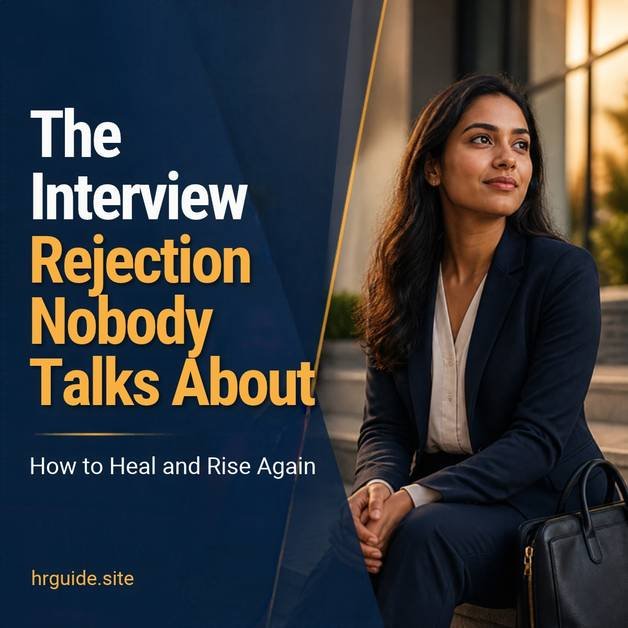
You prepared for days. You ironed your shirt the night before. You practiced your answers in front of the mirror until you knew them by heart. You walked out of the interview room feeling hopeful, maybe even proud.
Then you waited.
One day. Three days. A week. And finally, a short email arrived: “Thank you for your time. Unfortunately, we have decided to move forward with another candidate.”
Just a few lines. Yet somehow they felt heavier than anything you had carried that month.
If you are reading this after a rejection, I want you to know something first: what you feel right now is normal, and you are not alone.
At my first interview i was very confidence that i have experience in human resources and i easily can passed the interview but when the interviewer start questions he asked me theoritical questions instead practicle i asked him that i know about all work but less knowledge about theoritical i confused but he couraged me and said you are good in practical but also weak in theory so he give me some tips and asked me for apply next time.
Why Interview Rejection Hurts So Much
A rejected application is easy to shrug off. An interview is different, because you showed up in person. You sat across from real people and told them your story, your dreams and your skills. When the answer is “no,” it doesn’t feel like a business decision. It feels personal.
Many job seekers quietly deal with:
- Self-doubt: “Maybe I am not good enough.”
- Shame: “I don’t want to tell my family or friends.”
- Fear: “What if it keeps happening?”
- Exhaustion: “How many times do I have to start over?”
Nobody sees these feelings. People see the confident professional on LinkedIn, but they don’t see the one sitting alone at night, refreshing an inbox that stays empty.
In my interview rejection i felt that i was not enough prepare for this and didn’t tell anyone but i tell my x boss he said every job not made for every person also he said some time company have one position and they select more than one person but only consider one later so its not mean you are not fit for the role its mean someone is deserved this seat .

The Hidden Weight of Waiting
For many people the rejection itself is not the hardest part. The waiting is. Every unknown number on your phone makes your heart jump. Every notification brings a little hope, and every silence takes a little of it away.
If a company never replied to you at all, you know this pain. Silence is a kind of answer, but it gives you no reason, no closure and no way to improve.
Please remember: a company’s silence says more about their process than about your worth.
What a Rejection Really Means (and What It Does Not)
A rejection does not mean:
- You are not talented.
- You wasted your time.
- You will never succeed.
- Something is wrong with you.
A rejection may simply mean:
- Another candidate matched the exact profile they had in mind.
- The role was already promised internally.
- The budget changed, or the position was put on hold.
- Your skills were right, but the timing was wrong.
Recruiters often say the final decision between two strong candidates comes down to small details that have nothing to do with a person’s value. You may have been a great candidate and still not the one they chose. Both can be true.
Step-by-Step: How to Heal After an Interview Rejection

Step 1: Allow yourself to feel it. Don’t force “positive vibes” in the first hour. Be disappointed. Take a walk. Cry if you need to. Feelings you suppress usually come back louder.
Step 2: Give yourself a 24-hour pause. Don’t send an angry reply and don’t make big decisions about your career today. Rest first.
Step 3: Separate your worth from the result. Say it out loud: “I was rejected for a position, not as a person.” The sentence sounds simple, but it protects your confidence.
Step 4: Write down what went well. Many candidates only remember their mistakes. Write three things you did well, such as a good answer, a confident moment or a question you asked. These are your real strengths.
Step 5: Reflect without punishing yourself. Ask honestly: Which question was hard? What would I answer differently next time? Treat this as learning, not as a trial against yourself.
Step 6: Politely ask for feedback. A short message can open a door:
“Thank you for the opportunity to interview. I would truly appreciate any feedback that could help me grow professionally. I hope our paths cross again.”
Some companies will reply and some won’t. Either way, you leave a professional impression, and some candidates have been contacted again for future openings this way.
Step 7: Talk to someone you trust. A mentor, a friend, a family member. Pain shared becomes lighter.

Step 8: Take care of your body and mind. Sleep, eat properly, move a little. Job hunting is a marathon, and you can’t run it while exhausted.
Step 9: Apply again, a little wiser. When you are ready, send the next application. Each interview, even a rejected one, makes you calmer, sharper and more prepared for the next.
A Message for the Person Who Is Tired
If you feel tired of trying, that doesn’t make you weak. It makes you human. Many people who are now successful in their careers once sat exactly where you are, wondering if the next “yes” would ever come.
Careers are rarely straight lines. They bend, pause and sometimes turn in directions we never planned. A closed door today can lead to a better office, a better team or a better version of you tomorrow.
A Note for Employers and HR Teams
If you are on the hiring side, remember that behind every CV is a real person who gave their time and hope. A simple, kind rejection message, or even a short piece of feedback, costs almost nothing. For the candidate it can mean the difference between feeling disrespected and feeling valued. Great companies are remembered for how they treat the people they don’t hire.
Final Thoughts
You are more than one interview. You are your effort, your patience and your courage to keep showing up. Rejection hurts, but it is not the end of your story. It is a chapter, and a better one is waiting to be written.
So take a deep breath, be kind to yourself, and when you are ready, try again. Someone out there is looking for exactly the person you are.

Frequently Asked Questions
Is it normal to feel depressed after an interview rejection? Feeling sad, low or discouraged is very common. If the feelings last for weeks or affect your daily life, please talk to a trusted person or a mental health professional.
How long should I wait before applying again? There is no fixed rule. Many people feel ready after a few days of rest and reflection. Listen to your own energy.
Should I ask for feedback after a rejection? Yes, politely and briefly. Not every company will respond, but it shows professionalism.
How can I stop taking rejection personally? Remember that hiring decisions involve many factors you can’t see. Focus on what you can control: your preparation, attitude and growth.
Written by Muhammad Faisal, HR professional and founder of hrguide.site.

About Muhammad Faisal
Muhammad Faisal is an HR professional with an MBA in Human Resources and six years of experience across diverse HR domains. Through HRGuide.site, he turns real-world HR knowledge into practical insights, career advice, interview tips, and valuable resources to help professionals grow and organizations thrive.



Great Knowledge