15 Interview Mistakes That Can Cost You Your Dream Job
You studied hard. You updated your CV. You waited weeks for that call. Then the interview day finally comes, and within a few minutes you feel something slipping away. Maybe you said the wrong thing. Maybe you froze. Maybe you walked out thinking, “Why didn’t I say that?”
If this feels familiar, you are not alone. Almost everyone has made an interview mistake, and most of them are completely avoidable. The painful part is that employers rarely tell you what went wrong. You just receive a polite “we will get back to you,” and silence.
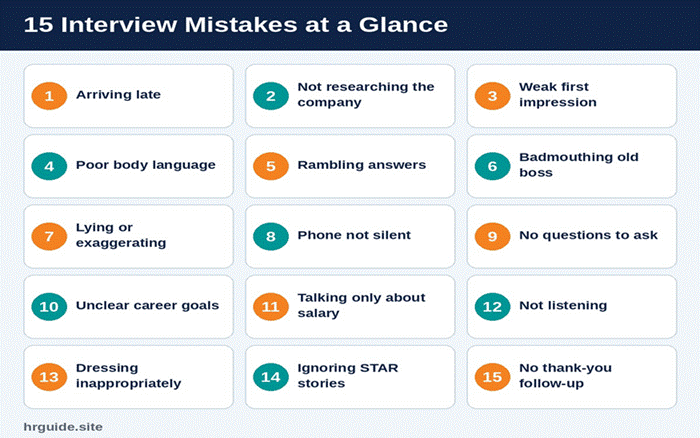
In this guide, I explain the 15 most common interview mistakes that cost candidates their dream jobs, along with simple ways to fix each one. This article is written from an HR professional’s point of view, based on real interview situations, not on theory.
| As an HR professional with over six years of experience and more than 1,000 interviews conducted, I have seen many talented candidates lose opportunities because of small, avoidable mistakes. Sometimes, their skills were excellent, but their interview approach held them back. I wrote this article to help candidates understand these mistakes and prepare with more confidence. |
Why Interview Mistakes Matter More Than You Think
Most hiring managers meet several candidates for one position. Often, two or three of them have similar qualifications. In that situation, the final decision is rarely about who knows more. It is about who communicates better, shows more interest and feels like a safer, more positive addition to the team.
That is why small mistakes matter. A late arrival, a careless answer or a missing thank-you note can quietly move you from the “yes” pile to the “maybe” pile. The good news is that every mistake below can be improved with a little awareness and practice.
The 15 Interview Mistakes (and How to Fix Them)
1. Arriving Late (or Too Early)
Why it hurts: Walking in late tells the interviewer how you will treat deadlines. Arriving 30 minutes early can also be awkward, because the team may not be ready for you. Punctuality is the first, silent question every interviewer asks.
How to fix it: Plan your route the day before and leave early for traffic. Aim to reach the building 10–15 minutes before your slot. If something truly unexpected happens, call or message the HR contact immediately and explain politely.
| In recruitment, interview schedules are often tight, especially when several candidates are lined up for the same position. When someone arrives late without informing HR, it creates difficulties for the entire schedule. I have learned that punctuality is not just about reaching on time; it also reflects how seriously a candidate takes a professional commitment. |
“the real cost of attending a first interview”
2. Not Researching the Company
Why it hurts: “So, what does our company do?” is a question that ends interviews early. When you know nothing about the employer, it shows you are applying everywhere and are not truly interested in this role.
How to fix it: Spend 30 minutes before the interview reading the company website, recent news, social media pages and the job description. Prepare one or two points such as “I noticed your team is expanding into…” to show real interest.
| During interviews, I always notice when a candidate has taken time to research our company. Candidates who understand our business, services, and industry can explain why they want to join and how they can contribute. It makes a strong impression and shows genuine interest. My advice is to spend at least 25–30 minutes researching the company before every interview. |
3. Making a Weak First Impression
Why it hurts: Interviewers form an opinion in the first minute: handshake, smile, eye contact and tone of voice. A mumbled greeting or a nervous, lifeless “hello” makes the rest of the interview an uphill climb.
How to fix it: Greet everyone politely, smile, offer a firm (not crushing) handshake where culturally appropriate, and say your name clearly. Practise your first 30 seconds out loud until it feels natural.
| From my experience conducting interviews, the first few moments can make a big difference. I have noticed that candidates who enter with a polite greeting, a natural smile, and confident body language create a positive impression. You don’t need to be perfect or overly confident. A simple “Good morning, thank you for giving me this opportunity” can help you start the interview on the right note. |
4. Poor Body Language
Why it hurts: Crossed arms, slouching, looking at the floor, tapping your feet or checking the clock all send messages that your words may not match. Interviewers trust body language more than rehearsed answers.
How to fix it: Sit upright, keep your hands relaxed on the table or lap, maintain natural eye contact and nod when the interviewer speaks. If you are nervous, take a slow breath before answering.
| During interviews, I have noticed candidates with excellent knowledge sometimes struggle to communicate confidence through their body language. Constantly looking down, playing with their hands, or avoiding eye contact can make them appear less confident than they actually are. I always advise candidates to sit comfortably, maintain natural eye contact, and listen carefully. Remember, your body language communicates even when you are not speaking. |
“managing anxiety before a job interview”
5. Giving Long, Rambling Answers
Why it hurts: Rambling hides your main point. Interviewers have many candidates to meet, and a three-minute answer to a simple question tells them you cannot communicate clearly.
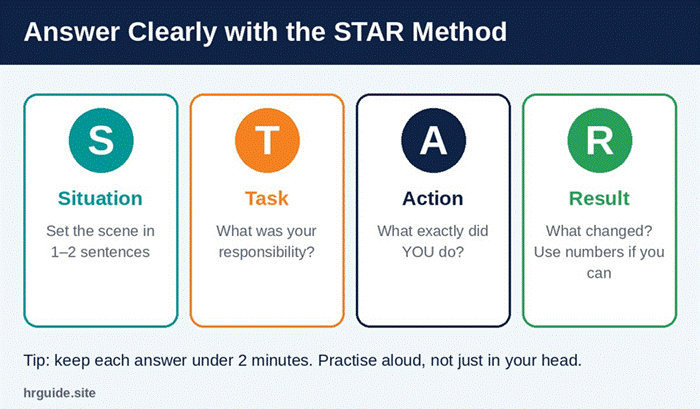
How to fix it: Use a simple structure: point, example, result. Keep most answers between one and two minutes, then stop and let the interviewer ask for more. See the STAR method image below.
| I have interviewed candidates with impressive qualifications who struggled to explain their actual responsibilities. When I asked what they personally contributed to a project, some continued describing their team’s achievements instead of their own role. This is where candidates lose an opportunity to demonstrate their real value. Knowing your work is important, but being able to explain it clearly is equally important. |
6. Badmouthing Your Previous Employer or Boss
Why it hurts: Even if your last boss was difficult, criticising them in an interview makes you look negative and hard to manage. The interviewer quietly wonders, “Will this person speak about us like this one day?”
How to fix it: Stay professional. Talk about what you learned and what you are looking for now. For example: “I am looking for an environment with more growth and clearer responsibilities.”
| During interviews, I pay close attention to how candidates talk about their previous employers and managers. I understand that not every workplace offers a positive experience, but constantly blaming others or speaking negatively about a former company creates a poor impression. I appreciate candidates who explain challenges professionally, take responsibility for their learning, and focus on what they want to achieve in their next role. |
“signs your manager is pushing you to resign”
7. Lying or Exaggerating on Your CV
Why it hurts: A small lie about experience, salary or a skill can be discovered through reference checks, skill tests or a single follow-up question. Once trust is lost, no talent can bring it back.
How to fix it: Be honest and present your real experience confidently. If you lack a skill, say so and explain how quickly you can learn it, with an example of when you did that before.
| During recruitment, a CV is only the starting point of evaluation. We also discuss previous responsibilities, technical knowledge, employment history, and achievements. Sometimes, what a candidate claims on paper does not match what they can explain during the interview. From an HR perspective, an honest candidate with developing skills can be a better hiring prospect than someone who exaggerates their experience. |
8. Letting Your Phone Ring or Checking It
Why it hurts: A ringing phone or a quick look at a message tells the interviewer that the meeting is not your top priority. It breaks the flow and looks disrespectful.
How to fix it: Switch your phone to silent (not just vibrate) before you enter the building and keep it out of sight. For online interviews, turn off notifications on your computer too.
| I have seen interviews lose their natural flow because a candidate’s mobile phone started ringing during an important discussion. Even a short interruption can affect concentration and create an unprofessional impression. My advice is simple: always switch off your phone or put it on silent before entering the interview room. Give the panel your complete attention and show that you respect their time. |
9. Having No Questions to Ask
Why it hurts: When the interviewer asks, “Do you have any questions for us?” and you say “No,” it can sound like you have no real interest in the job, the team or the company.
How to fix it: Prepare three thoughtful questions, such as “What does success look like in the first 60 days?”, “How is performance measured?” and “What are the biggest challenges for this team?”
| One question I particularly appreciate from candidates is, “What would success look like in this role during the first three to six months?” It shows me that the candidate is not just interested in getting the job but is also thinking about performance, expectations, and long-term contribution. I believe asking thoughtful questions at the end of an interview demonstrates preparation, confidence, and genuine interest in the opportunity. |
10. Not Knowing Your Career Goals
Why it hurts: “Where do you see yourself in five years?” is not a trap. Employers want to know whether the role fits your direction. A blank or unrealistic answer suggests you may leave soon or lack direction.
How to fix it: Connect your goals with the job. For example: “I want to grow into a leadership role in HR, and this position helps me build the skills I need.” Keep it honest and realistic.
| In my HR experience, I have met many candidates who struggled to explain their career goals during interviews. Some had good qualifications and experience but had not clearly thought about where they wanted to go professionally. I have noticed that candidates who understand their strengths, identify areas for improvement, and have clear career goals communicate their ambitions with much greater confidence. |
11. Talking Only About Salary and Benefits
Why it hurts: Salary is important, and you have every right to discuss it. But asking about pay, leave and benefits before showing your value makes the employer think you care only about money.
How to fix it: Focus first on the role, your skills and the value you can add. Bring up salary when the interviewer opens the topic or at the offer stage. Research the market range beforehand so your expectation is realistic.
| One challenge I regularly encounter in recruitment is the gap between a candidate’s salary expectations and the company’s approved budget. Sometimes, a candidate has the right experience, but the negotiation becomes difficult because expectations are not aligned. This is why I believe candidates should research market compensation and understand the responsibilities before entering salary discussions. |
12. Not Listening Carefully
Why it hurts: Some candidates are so busy preparing their next answer that they miss the actual question. Answering something different from what was asked wastes time and signals poor communication.
How to fix it: Listen to the full question, pause for a second and then answer. If you are unsure, politely ask: “Could you please clarify what you would like me to focus on?”
| In my interview experience, I have noticed that some candidates are so focused on giving impressive answers that they forget to listen to the actual question. The candidates who take a moment to understand the question and then respond with relevant examples usually create a stronger impression. My advice is simple: listen carefully, pause if needed, and answer what the interviewer is actually asking rather than what you have prepared in advance. |
13. Dressing Inappropriately
Why it hurts: Your clothing is part of your message. Too casual can look careless, and too flashy can distract. You do not need expensive clothes, but you do need to look neat and suitable for the role and the company culture.
How to fix it: Dress one level above the daily dress code of the company. Make sure clothes are clean and ironed, shoes are polished and grooming is simple. For video interviews, dress fully, not just from the waist up.
| From an HR perspective, professional presentation is about being neat, clean, and appropriately dressed, not wearing expensive brands or formal suits. I have always believed that candidates should dress according to the company’s culture and the nature of the role. A simple, well-maintained appearance shows preparation, respect for the opportunity, and attention to professional details. |
14. Not Using Real Examples (Ignoring the STAR Method)
Why it hurts: Answers like “I am a hard worker” or “I am a team player” are common and forgettable. Without proof, interviewers cannot believe your claims.
How to fix it: Prepare four or five stories from your work, studies or volunteering. Use STAR: Situation, Task, Action, Result. Reuse the same stories for different questions.
| In my HR career, I have learned that practical achievements make a much stronger impression than general statements. For example, when discussing recruitment experience, I prefer sharing how I improved the hiring process, managed multiple vacancies, and helped the organization close positions within deadlines. My advice to candidates is to prepare two or three real workplace examples, explain the challenge, describe your action, and highlight the result. A measurable achievement always makes your answer more memorable. |
15. Forgetting to Follow Up After the Interview
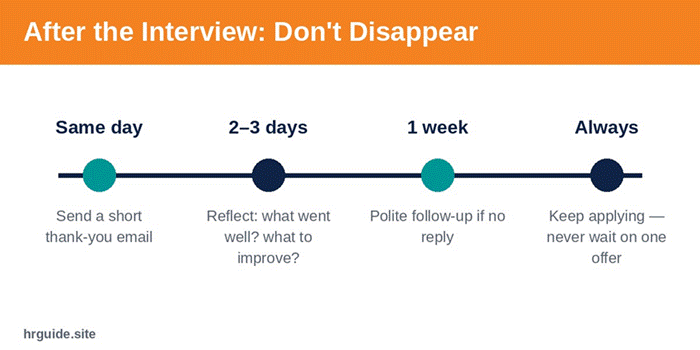
Why it hurts: Many candidates walk out and never contact the employer again. A short thank-you email shows professionalism, interest and good manners, and it keeps your name fresh in the recruiter’s mind.
How to fix it: Send a polite thank-you email within 24 hours. Thank them for their time, mention one thing you enjoyed discussing and say you are excited about the opportunity. If you have heard nothing after the promised time, send one polite follow-up.
| In my HR experience, I appreciate candidates who send a short and professional thank-you message after an interview. It shows courtesy, genuine interest, and good communication skills. While a follow-up message cannot replace interview performance or qualifications, it helps keep the candidate’s interest visible and leaves a positive final impression. My advice is to send a simple thank-you email within 24 hours of your interview. |
“how to pass a final interview with an HR manager”
Quick Checklist: Before You Walk Into the Interview Room
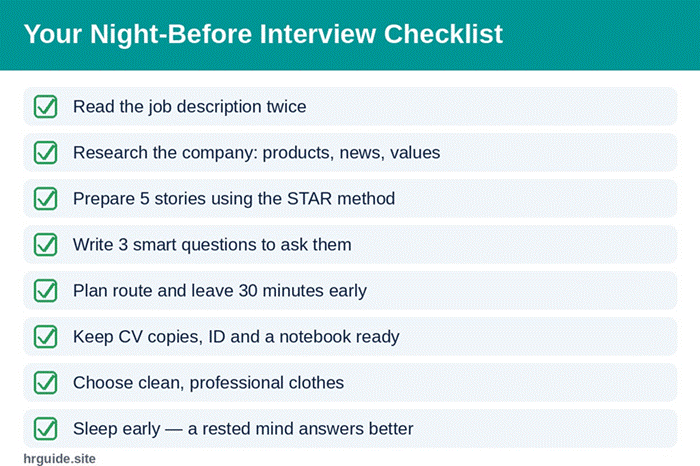
- I know what the company does and what the role needs.
- I have prepared at least four real examples using the STAR method.
- I know my career goals and can explain them in two sentences.
- I have three smart questions to ask the interviewer.
- My phone is on silent and my documents are ready.
- I know my route and will arrive 10–15 minutes early.
- I will send a thank-you email within 24 hours.
What to Do If You Have Already Made a Mistake
Everyone slips sometimes. If you realise you gave a weak answer, you can often recover in the same interview: “Could I add something to my earlier answer?” Interviewers appreciate honesty and self-awareness. If the interview is already over, mention what you would like to clarify in your thank-you email.
Most importantly, treat every interview as practice. Write down what went well and what to improve straight after you leave. The next interview will always be better than the last.
| I once observed a candidate struggle with an important interview question and give an incomplete answer. Instead of becoming nervous, the candidate politely asked if they could explain it again and then provided a much clearer response with a practical example. That moment reminded me that making a mistake is not the end of an interview. What matters is how calmly and professionally you recover from it. |
Frequently Asked Questions (FAQs)
Q: What is the most common interview mistake?
A: Lack of preparation is the most common one. It shows up as not researching the company, unclear answers and no questions for the interviewer.
Q: Can one mistake cost me the job?
A: Sometimes, especially serious ones such as lying or showing disrespect. Small mistakes can usually be balanced by strong answers and a positive attitude.
Q: How can I stop being nervous in an interview?
A: Practise answers aloud, prepare your stories, sleep well and take slow breaths before you start. Nervousness is normal, and interviewers expect some of it.
Q: Should I send a thank-you email after an interview?
A: Yes. A short, polite email within 24 hours shows professionalism and keeps you in the interviewer’s memory.
Q: How early should I arrive for an interview?
A: About 10–15 minutes early is ideal. Arrive in the area earlier, but go in close to that time.
Final Thoughts
Your dream job is not lost because you are not talented. It is usually lost because of small, avoidable mistakes in preparation, communication and attitude. The 15 mistakes above are simple to fix when you know about them.
Prepare well, be honest, listen carefully and treat the interviewer with respect. Whether or not you get this job, every interview teaches you something. Keep learning, keep applying and keep believing in yourself. Your right opportunity is waiting.
Which of these mistakes have you made, or seen others make? Share your experience in the comments below. It may help another job seeker.
| After conducting thousands of interviews, one thing I want every candidate to understand is that you don’t need to be perfect to get selected. You need to be prepared, honest, confident, and willing to learn. Every interview is an opportunity to improve, even if you don’t receive an offer. Learn from your mistakes, keep moving forward, and never let one rejection define your potential. Thank you for reading. I hope this guide helps you approach your next interview with greater confidence. |

About Muhammad Faisal
Muhammad Faisal is an HR professional with an MBA in Human Resources and six years of experience across diverse HR domains. Through HRGuide.site, he turns real-world HR knowledge into practical insights, career advice, interview tips, and valuable resources to help professionals grow and organizations thrive.