Grievance & Charge Sheet Procedure in Pakistan (Step-by-Step)
Grievance and Disciplinary Cases in Pakistani Factories: The Complete Procedure from Complaint to Final Decision
Every factory has a day that nobody forgets. A security guard files a report about a missing carton. A supervisor writes up a shouting match on the shop floor. A worker, shaking with anger, hands over a handwritten complaint against his line manager. In that moment two things are at stake together: the discipline of the workplace and the livelihood of a human being.
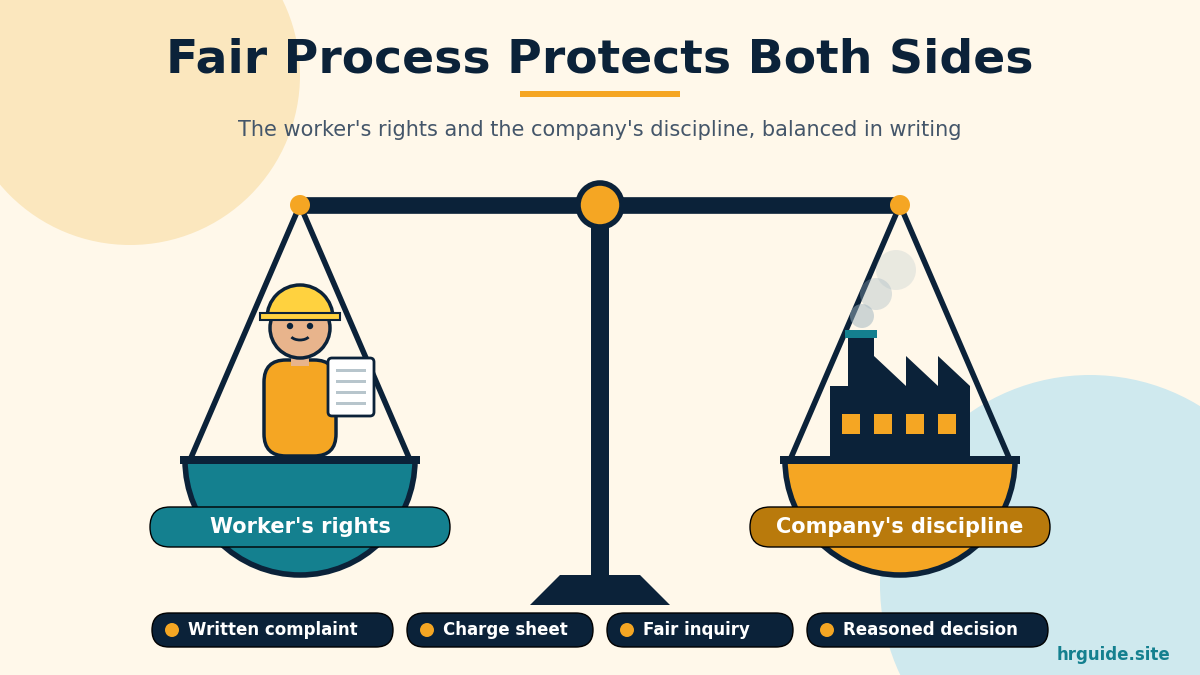
Handled properly, a grievance or disciplinary case protects both. Handled carelessly, even a worker who really did something wrong can walk back through the gate with a Labor Court order in his hand, and an innocent one can lose a job that fed his family for fifteen years.
This guide explains the full procedure used in Pakistani factories and commercial establishments, in plain language: the written complaint, the security report, the charge sheet, the inquiry notice, the inquiry committee and the final decision. At the end, you will find eight sample documents you can adapt for your own workplace.
A Fair Inquiry Can Save Someone’s Career!
As an IR Officer, I once received a security report accusing an employee of carton theft and recommending his resignation.
Instead of making a quick decision, I arranged a meeting, listened to his side, reviewed the evidence, and checked his WhatsApp conversations.
The investigation revealed that he had followed his senior’s instructions without knowing about the actual theft.
I documented the facts, presented the evidence, and helped prevent an innocent employee from losing his job.
My biggest lesson: Never judge an employee based on one report. Listen, investigate, verify, and then decide.
That’s what fair HR practice looks like.
#HumanResources #EmployeeRelations #GrievanceHandling #IndustrialRelations #HRLessons
Clarify the investigation outcome. Use more neutral investigation language
| In this guide What a grievance case really means, and which laws applyMisconduct and the punishments the law allowsThe 8-step procedure, with who does what at each stepThe one-month rule that decides many casesA fictional case study from start to finishThe worker’s side: grievance notice and Labour CourtCommon mistakes, a case file checklist, FAQs and eight sample documents |
| Key takeaways A disciplinary case is a chain of written steps. Every missing link can be used against the employer later.Under Standing Order 15(4), the worker must be told in writing about the alleged misconduct within one month of the misconduct, or of the date it came to the employer’s notice, and must be given a chance to explain.A charge sheet must be specific: what happened, when, where, and which clause of the Standing Orders is alleged to be broken.The inquiry must be fair: proper notice, a real hearing, a chance to present witnesses and question the other side, and a report with reasons.The punishment must match the misconduct, and it must be given in writing. The worker can still bring a grievance, so keep the file complete. |
1. What is a grievance case in a factory?
In everyday factory language, almost every dispute between an employer and a worker is called a “case”. Legally, though, there are two different situations, and mixing them up causes confusion.
| Disciplinary case | Worker’s grievance | |
| Who starts it | The employer, after a complaint or report about the worker’s conduct | The worker, when a legal right is not given or an action seems unfair |
| Main law | Standing Orders (Order 15 in the 1968 Ordinance) | Section 33 of the Industrial Relations Act and its provincial equivalents |
| First document | Complaint or incident report, then charge sheet | Written grievance notice to the employer |
| Possible end | Warning, fine, withheld increment, demotion or dismissal | Employer’s decision, or a petition before the Labour Court |
This article follows the employer’s side, from the first complaint to the final order, because that is where most HR officers need help. We also cover the worker’s side later, since every final order can turn into a grievance.
2. Which laws apply?
Pakistan does not have one single “factory discipline law”. The rules come from a few connected laws. The Factories Act mainly deals with working conditions, safety and hours. Discipline and dismissal are governed mainly by the Standing Orders and the Industrial Relations laws.
| Law | What it covers |
| Industrial and Commercial Employment (Standing Orders) Ordinance, 1968 | Misconduct, charge sheet, inquiry, punishment and termination. Order 15 is the heart of the disciplinary procedure. It applies in the Islamabad Capital Territory and, in adopted form, in Punjab. |
| Provincial standing orders laws | Sindh Terms of Employment (Standing Orders) Act, 2015; Khyber Pakhtunkhwa Industrial and Commercial Employment (Standing Orders) Act, 2013; Balochistan Industrial and Commercial Employment (Standing Orders) Act, 2021. The ideas are similar but order numbers differ. |
| Industrial Relations Act, 2012, and provincial Industrial Relations Acts (for example Punjab, 2010) | Grievance notice, Labour Court and the rules for unfair labour practices. Section 33 deals with individual grievances. |
| Principles of natural justice | Nobody should be punished unheard, nobody should judge their own case, and justice must be seen to be done. Courts apply these principles even where the written rules are silent. |
| Check your own establishment Standing Orders generally apply to industrial and commercial establishments above a minimum number of workmen, and they protect persons who fall within the definition of “workman”. Supervisory and managerial staff are usually governed by their contracts and company policy, but a fair process is still good practice for everyone. Always read the Standing Orders that apply in your province and your company’s own certified or model standing orders. |
3. Misconduct and punishments
Not every mistake is “misconduct” in the legal sense. The Standing Orders list specific acts and omissions. Broadly, they fall into two groups.
Serious misconduct (examples)
- Wilful disobedience of a lawful and reasonable order, alone or with others
- Theft, fraud or dishonesty connected with the employer’s business or property
- Wilful damage to or loss of the employer’s goods or property
- Taking or giving bribes or any illegal gratification
- Habitual absence without leave, or absence without leave for more than ten days
- Habitual late coming, habitual negligence, or habitual breach of laws that apply to the establishment
- Riotous or disorderly behaviour during working hours, or any act that undermines discipline
- Illegal strike, inciting others to strike in breach of the law, or a go-slow
Lesser faults (examples)
Disregard of rules or orders, improper behaviour, false or misleading statements, careless or wasteful work, and malingering. These normally call for lighter action, but repeated lesser faults can add up to serious misconduct.
Punishments commonly available
- A fine, within the limit set by the law on payment of wages and with its conditions
- Withholding of an increment or a promotion for a specified period, not beyond one year
- Reduction to a lower post
- Dismissal without notice or pay in lieu of notice, for serious proven misconduct
Choose the clause carefully. A charge that quotes the wrong clause, or no clause at all, gives the worker an easy argument later. Also confirm the exact wording and limits in the Standing Orders of your own province.
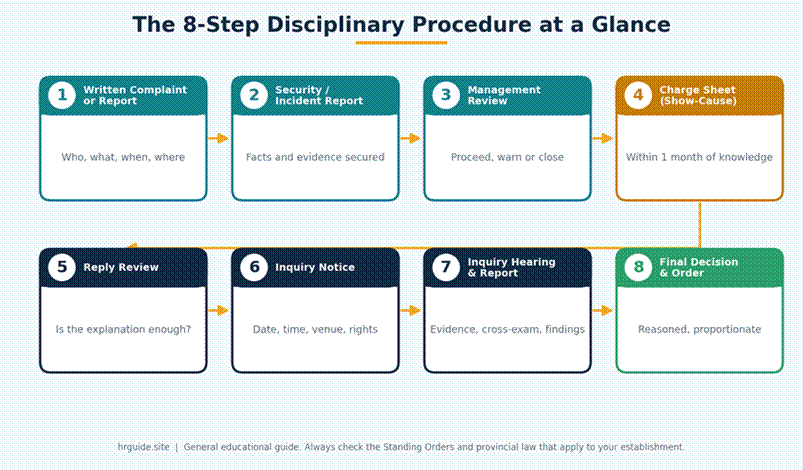
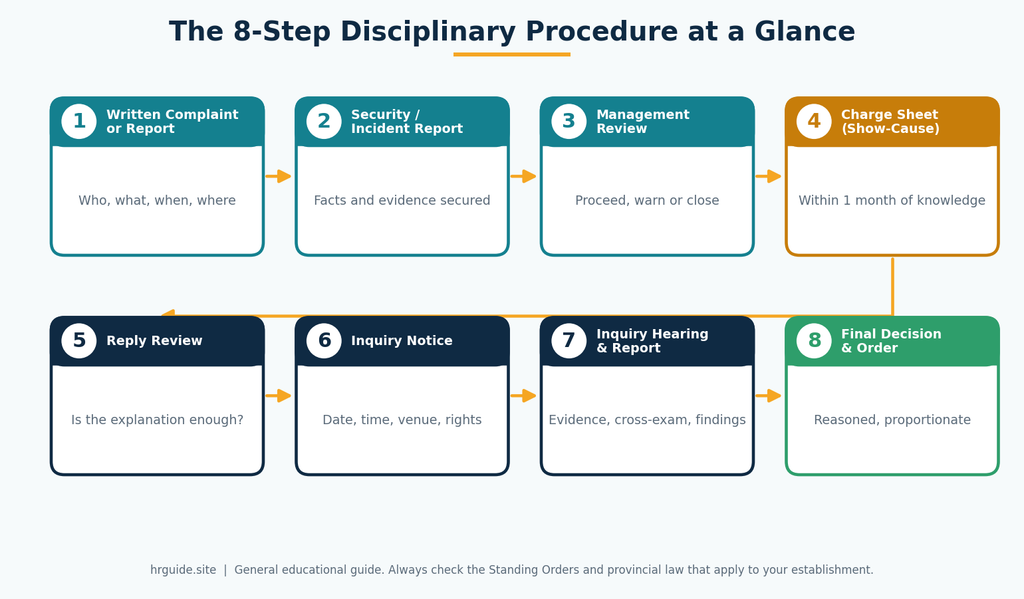
4. The 8-step procedure
The order of steps matters. Skipping one, or doing them out of order, is the most common reason cases fail in front of a Labour Court.
Step 1: Written complaint or supervisor’s report
Every case starts with a written record. It may be a complaint from a worker, a report from a supervisor or a note from the store in-charge. A verbal rumour is not a case. Ask the person to write down who, what, when and where, and to sign it.
- HR receives it, stamps the date and time, and gives an acknowledgement. The date matters because it may start the one-month clock.
- If a worker complains about a manager, HR must not let that manager handle the complaint.
- Protect the person who complained. Punishing a complainant creates a second, bigger problem.
A sample format is in Template A.
Step 2: Security or incident report and fact gathering
When the incident involves the gate, stores, property, violence or safety, the security department writes an incident report. It must contain facts only: date, time, place, persons present, what was seen, what was recovered and what evidence exists. Opinions and guesses do not belong in it.
- Secure evidence quickly: CCTV footage (it is often overwritten within days), gate register pages, attendance and biometric records, vehicle logs, photographs.
- Record the exact date and time the report reached management. This is evidence of when the company first knew.
- This stage is fact gathering, not punishment. Nobody is judged yet and nobody should be told they are guilty.
Step 3: Management review
HR and the head of department read the file together and choose one of three paths: close the matter with no action, give counselling or an informal warning, or proceed to a formal charge. Ask three questions before deciding.
- If proved, which clause of the Standing Orders would this fall under?
- What date did the misconduct happen, and what date did it come to the company’s notice? Write both dates in the file.
- Is the person who will sign the charge sheet, and later decide the case, free from any personal involvement?
Step 4: The charge sheet (show-cause notice)
The charge sheet is the first formal document the worker receives, and it is the one that courts examine most closely. In practice HR teams use the terms “charge sheet” and “show-cause notice” almost interchangeably. What the law cares about is that the worker is informed in writing of the alleged misconduct and given a fair chance to explain.
A good charge sheet contains:
- Reference number, date, and the worker’s name, designation, employee number and department
- The facts of the allegation: what happened, on which date, at what time, and where
- The clause of the Standing Orders that the alleged act is said to break
- A list of the documents and evidence being relied on, attached or available to inspect
- A reasonable deadline for a written reply (three to seven days is common in practice)
- The signature of the competent authority
Serve it properly. Hand it over against a signed copy. If the worker refuses to sign, record the refusal in front of two witnesses and send a copy by registered post or courier to the address on file. Proof of service is part of the case.
Keep the charge sheet to one incident. Courts have rejected charge sheets that mixed in older absences outside the one-month window, because those older matters were time barred. Use careful, neutral wording such as “it is alleged that”.
I once reviewed a disciplinary case where the initial allegation was too vague and lacked specific details about the employee’s alleged misconduct. This could have weakened the company’s position and resulted in an unfair decision. It taught me that a charge sheet must clearly mention the incident date, time, location, specific allegation, and supporting evidence.
My golden rule when drafting a charge sheet: Be specific, factual, and evidence-based. Never make allegations that you cannot support with facts.
Step 5: Reviewing the worker’s reply
The worker may admit the act, deny it, explain the circumstances, or ask for documents or more time. Read the reply with an open mind. If it satisfies management, close the matter in writing. If it does not, or if facts are disputed, move to an inquiry.
Where the worker admits a serious charge, many employers still record that admission in a short, documented hearing before imposing the heaviest punishment, because courts expect a fair process when a livelihood is at stake.
Step 6: The inquiry notice
The inquiry notice tells the worker exactly when and where the hearing will take place and who will conduct it. It should be served early enough for the worker to prepare.
- Mention the charge sheet and the worker’s reply (or that no reply was received).
- Name the committee members, and give the date, time and venue. Hold the hearing in working hours.
- State that the worker may present a defence, bring witnesses and documents, and question the management’s witnesses. If your policy or union agreement allows a co-worker or representative to accompany the worker, say so.
- If the worker does not attend, send a second notice. Only then proceed on the available record, and write down why.
A sample format is in Template D.
Step 7: The inquiry committee, hearing and report
The committee is the heart of fairness in the process. It should be impartial: members should have no personal stake in the matter and should not be the complainant or the person who gave the incident report. Many companies use three members, for example an HR officer, a manager from a different department and, where policy or agreement provides, a worker representative. An order that forms the committee (Template E) keeps the record clean.
A typical hearing runs in this order:
- The chair reads out the charge and records the worker’s plea.
- Management presents its evidence: the complainant, the security officer and other witnesses, with documents.
- The worker or representative questions each witness.
- The worker presents a defence: statement, witnesses and documents.
- The committee may ask its own questions to anyone appearing.
- Every statement is written down, read back and signed. Minutes are kept for each sitting.
- The committee writes a report: charge, evidence, findings on each charge with reasons, and its recommendation.
| Suspension while the inquiry is pending The Standing Orders allow a worker to be suspended during an inquiry, but only for the purpose of the inquiry, for a limited time, and with rules about pay. The limits differ between the 1968 Ordinance, its amendments and the provincial laws. Check the current text for your province before you suspend anyone, and never use suspension as a punishment in disguise. |
During an employee grievance inquiry, I focused on keeping the process fair and unbiased. I ensured that the people involved had no personal connection to the case and gave the employee enough time to explain his position without interruption. The employee was initially nervous, but I maintained a calm and respectful environment. One important moment came when I asked him to share supporting WhatsApp messages. Those messages changed the direction of the inquiry and helped reveal the actual facts.
My lesson: A fair inquiry starts with the right questions, an unbiased approach, and giving every employee a chance to be heard.
Step 8: The final decision and written order
Management reads the inquiry report, the worker’s reply and the service record, and then decides. The decision-maker is not bound to copy the committee’s recommendation, but must have a reason if departing from it.
- If the charge is not proved, say so in writing, close the case and restore normal duties and benefits.
- If it is proved, pick a punishment that fits the seriousness of the act, the worker’s record and past practice for similar cases. Treating like cases alike is a powerful defence against a claim of victimisation.
- The order must state the charge, the finding, the reasons, the punishment and its effective date. It should also say how the worker can raise a grievance.
- Serve the order against a signed copy, keep proof of service, and close the file.
- In one employee misconduct case, I avoided recommending dismissal until all facts and evidence were reviewed. After completing the inquiry, I considered the employee’s involvement, intention, available evidence, and company policies. I discussed the findings with management before recommending an appropriate action. The evidence showed that the employee was not knowingly involved in the misconduct, so dismissal would have been unfair. The decision helped protect the employee’s job and reinforced the importance of fair treatment within the team.
- My principle: Punishment should be based on evidence, the seriousness of misconduct, and company policy—not emotions or assumptions
5. The one-month rule that decides many cases
Standing Order 15(4) says that no order of dismissal may be made unless the worker has been informed in writing of the alleged misconduct within one month of the date of the misconduct, or of the date on which it came to the employer’s notice, and has been given an opportunity to explain. Reported judgments of the High Court of Sindh, for example, have treated this one-month requirement as mandatory, and have set aside action where the charge sheet or show-cause notice came too late.
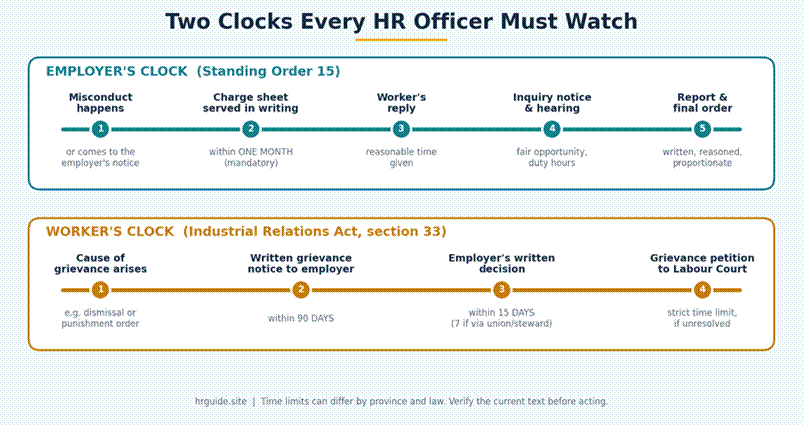
Image 3: The two clocks in every disciplinary case.
- Write down the date of the misconduct and the date it came to the company’s notice, and keep proof of both.
- Do not wait for a perfect investigation before issuing the charge sheet. Issue it within the month, and complete the inquiry afterwards.
- A late charge sheet is not a small mistake. It can make the whole dismissal unlawful, however strong the evidence.
6. Case study: the missing carton (fictional example)
This is a fictional example
The company, people and dates below are invented to show how the steps connect. They are not a real case.
At a fictional garments factory, a security guard noticed a carton of finished shirts leaving the gate on a worker’s motorbike without a gate pass. The worker said it was a sample he had been allowed to take for a customer. Here is how a clean process handled it.
| Day | Step | What happened and which document was created |
| 1 | Security report | The guard wrote the incident report the same day, attached the gate register page and CCTV clip reference, and handed it to HR. HR noted the date received. |
| 2 | Written complaint | The store in-charge submitted a written complaint confirming that no sample had been approved. |
| 3 | Management review | HR and the department head decided to proceed under the Standing Order on dishonesty and breach of rules, and recorded the date of knowledge. |
| 5 | Charge sheet | A signed charge sheet was issued with the facts, the clause and the evidence list. The worker received it against signature and had five days to reply. |
| 9 | Reply review | The worker replied that a supervisor had verbally allowed it. Facts were disputed, so management ordered an inquiry. |
| 11 | Inquiry notice and committee order | A three-member committee (HR, a manager from another department and a worker representative) was formed. The worker was given five days’ notice of the hearing. |
| 16 | Hearing | The guard, store in-charge and supervisor were heard. The worker questioned each of them and produced one witness. All statements were signed. |
| 20 | Inquiry report | The committee found that theft was not proved, since the supervisor admitted a verbal permission, but the gate pass rule was clearly broken. |
| 23 | Final order | Management withheld the worker’s increment for six months for breach of gate rules, warned the supervisor in writing, and recorded the reasons. |
Notice what went right: every step produced a document, everything happened inside one month of the company’s knowledge, the worker could question the witnesses, and the punishment was proportionate to what was actually proved. A dismissal on suspicion alone would probably not have survived the Labour Court.
7. The worker’s side: grievance notice and Labour Court
A final order is not always the end. Under section 33 of the Industrial Relations Act, 2012, and the equivalent provincial laws such as the Punjab Industrial Relations Act, 2010, a worker can raise a grievance about a right guaranteed to them by law, an award or a settlement.
- The worker brings the grievance to the employer’s notice in writing within 90 days of the cause arising, either personally or through a shop steward or the collective bargaining agent.
- The employer must give a written decision within 15 days when the worker raises it personally, or within 7 days when it comes through a shop steward or collective bargaining agent.
- If the employer does not decide in time, or the worker is not satisfied, the worker may file a grievance petition before the Labour Court (or the National Industrial Relations Commission in the cases that fall under it).
- The petition must be filed within the limitation period. Federal guidance for the NIRC mentions two months and fifteen days after serving the grievance notice. Check the exact period for your province.
For HR officers, this means two things. First, never ignore a grievance notice. Reply in writing within the time allowed, even if you disagree. Second, your disciplinary file is the evidence the court will read, so keep it complete.
A sample worker’s grievance notice is in Template H.
8. Ten common mistakes (and how to avoid them)
| Mistake | Why it hurts | Better practice |
| Charge sheet issued after one month | The proceedings can be set aside as time barred | Record the date of knowledge and act within the month |
| Vague charge such as “misbehaved” | The worker cannot defend what is not specified | State facts, date, time, place and clause |
| One person is complainant, investigator and judge | Breaks the rule against bias | Use an impartial committee and an independent decision-maker |
| No proof of service | The worker can say he never received it | Signed receipt, witnessed refusal, registered post |
| Skipping the hearing because the worker “admitted” | Courts expect a fair process for serious punishment | Record the admission in a short documented hearing |
| Not allowing defence witnesses or questions | Denies a fair hearing | Let the worker question witnesses and present evidence |
| Dismissal on suspicion alone | Findings must rest on evidence | Decide on what was proved, with reasons |
| Punishing similar cases differently | Suggests victimisation | Check past cases before deciding |
| Mixing old incidents into a new charge | Older matters may be time barred | One incident per charge sheet |
| Ignoring a grievance notice | Employer loses its chance to settle | Reply in writing within the time allowed |
9. Case file checklist
When a case reaches a Labour Court, the file is the case. Before closing any disciplinary matter, check that you can put your hand on each of these documents.
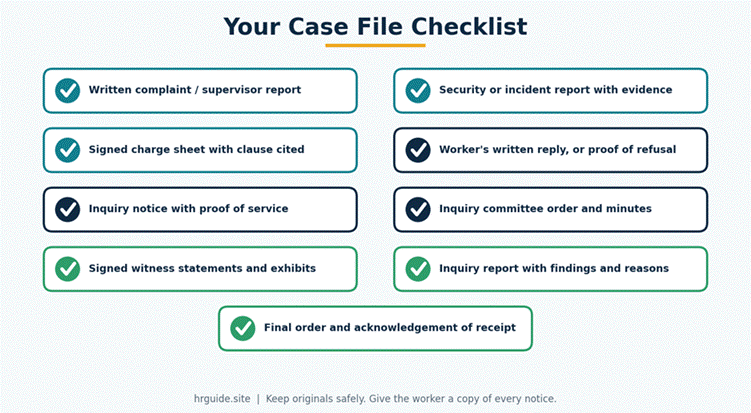
Image 4: Nine documents every disciplinary file should contain.
10. Frequently asked questions
How long does an employer have to issue a charge sheet?
Under Standing Order 15(4), the worker must be informed in writing of the alleged misconduct within one month of the misconduct or of the date it came to the employer’s notice.
Is a show-cause notice the same as a charge sheet?
In daily practice the two terms are often used for the same document. What matters legally is that the worker is told in writing what he is alleged to have done and is given a fair chance to explain.
Can a worker be dismissed without an inquiry?
It is risky. Standing Order 15(4) requires written notice and an opportunity to explain, and courts regularly set aside dismissals where the process was skipped. For serious punishment, hold a proper inquiry.
Who should sit on the inquiry committee?
Impartial people with no personal stake in the matter. Many companies use three members, such as HR, a manager from another department and, where policy allows, a worker representative.
Can the company suspend a worker during an inquiry?
The Standing Orders permit suspension for the purpose of the inquiry, for a limited period and with rules on pay. Check the current provision for your province first.
What can a worker do if the decision seems unfair?
Bring a written grievance to the employer within 90 days, wait for the employer’s decision (15 days), and then, if unsatisfied or if there is no reply, approach the Labour Court within the limitation period.
Does this apply to managers and office staff?
The Standing Orders protect persons who fall within the definition of workman. Managerial and supervisory staff are usually governed by their contract and company policy. A fair process is still the safest practice for everyone.
Conclusion
A good disciplinary process is not about winning against a worker. It is about showing, in writing, that the company listened, checked the facts and acted fairly. When you do that, discipline becomes stronger, because the rest of the workforce can see that the rules apply to everyone and that nobody is punished on rumour.
Start with a written complaint. Back it with a factual security report. Issue a clear charge sheet inside the one-month window. Give proper notice of the inquiry, let an impartial committee hear both sides, and end with a reasoned, proportionate written order. Keep every document.
From my experience handling employee grievances and workplace investigations, my advice to every new HR officer is simple: never rush to judgment, always listen to both sides, verify the evidence, document every detail, and remember that behind every case is a person’s career and dignity.
Be fair, stay professional, and let the facts guide your decisions.
| Disclaimer This article is for general education and does not replace legal advice. Labour laws, section numbers and time limits differ between provinces and change over time. Before taking action in a real case, check the current Standing Orders and Industrial Relations law that apply to your establishment, or consult a qualified labour lawyer. |
Laws referred to in this guide
- Industrial and Commercial Employment (Standing Orders) Ordinance, 1968 (Order 15 and related orders)
- Sindh Terms of Employment (Standing Orders) Act, 2015
- Khyber Pakhtunkhwa Industrial and Commercial Employment (Standing Orders) Act, 2013
- Balochistan Industrial and Commercial Employment (Standing Orders) Act, 2021
Sample documents (templates)
Copy and adapt these formats to your company letterhead. Replace everything in [square brackets]. They are general samples, so match them to the Standing Orders that apply to you.
About the Author – Muhammad Faisal Muhammad Faisal is an HR professional with an MBA in Human Resource Management and 6 years of experience in HR operations, talent acquisition, employee relations, and industrial relations. He is passionate about sharing practical HR knowledge, career guidance, and workplace insights. He founded HR Guide to make HR knowledge, career resources, templates, and professional guidance accessible to HR professionals, students, and job seekers.

About Muhammad Faisal
Muhammad Faisal is an HR professional with an MBA in Human Resources and six years of experience across diverse HR domains. Through HRGuide.site, he turns real-world HR knowledge into practical insights, career advice, interview tips, and valuable resources to help professionals grow and organizations thrive.