
The Hidden Cost of Workplace Stress And How to Fix It with Data

What if the problem is not that employees don’t know how to manage stress, but that the workplace keeps creating it?
Every HR professional has seen it. A wellbeing session receives excellent feedback; employees leave motivated and equipped with new strategies, yet within days they are back to the same deadlines, workloads, and pressures. The issue is not wellbeing initiatives themselves. The issue is expecting them to solve problems that are built into everyday work.
Too often, organizations treat workplace stress as an individual responsibility. Resilience, mindfulness, and time-management skills can help, but they can’t compensate for unrealistic workloads, unclear expectations, unsupportive leadership, or cultures where speaking up feels unsafe. When these issues persist, stress becomes a daily reality, affecting wellbeing, performance, engagement, attendance, and retention.
If organizations are serious about reducing workplace stress, they must look beyond generic wellness advice. Sustainable change comes from understanding what drives stress, recognizing its impact on people and performance, and addressing the workplace conditions that create it.
Why Generic Workplace Wellness Often Falls Short
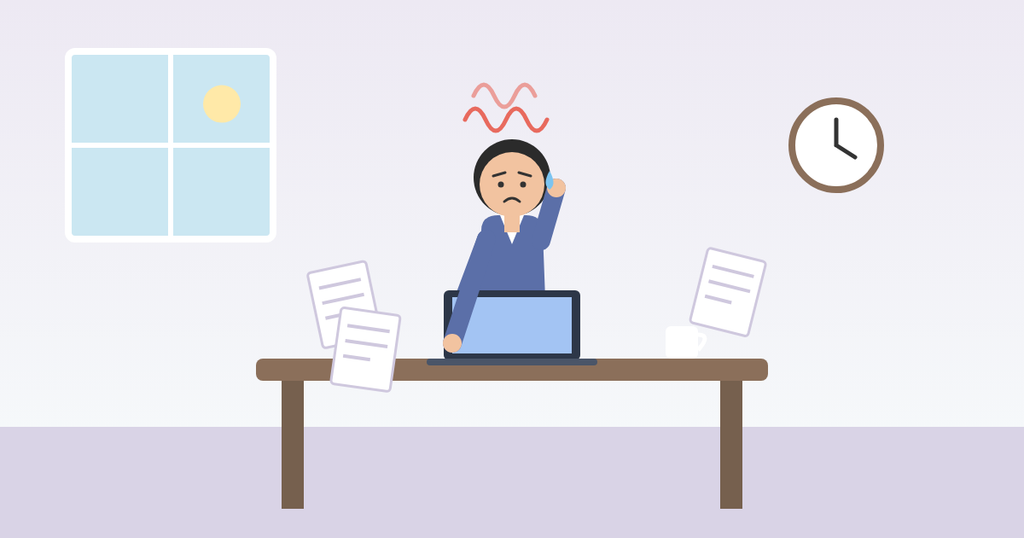
Workplace stress is not just a mental experience. It often shows up in the body first through headaches, muscle tension, poor sleep, fatigue, racing thoughts, and a constant sense of pressure. Even after the workday ends, many employees continue carrying the weight of unfinished tasks, looming deadlines, and ongoing worry.
Over time, this affects far more than well-being. Stress influences mood, concentration, energy, relationships, and performance. Employees may become irritable, withdrawn, or struggle with tasks they once handled with ease. Yet these signs are frequently mistaken for a poor attitude, disengagement, or lack of capability when they may actually be signs of sustained stress.
This is where many workplace wellbeing initiatives fall short. Organizations often respond with resilience training, mindfulness sessions, time-management workshops, or work-life balance advice. While these can be helpful, they often address symptoms rather than causes. Before teaching employees how to cope better, organizations must understand what they are coping with.
A team missing a deadline may not have a time-management problem; it may have an unrealistic workload. A department experiencing burnout may need clearer expectations, better resources, or stronger managerial support rather than another wellbeing seminar. Without identifying the true source of pressure, even the best wellness programs are unlikely to create lasting change.
The same stress score can also reflect very different realities. Sales teams may be struggling with aggressive targets, customer support teams with emotionally demanding interactions and conflicting demands, and finance teams with relentless reporting deadlines. The stress may look the same, but the causes and therefore the solutions differ.
That is why organizations need evidence, not assumptions. Stress-source surveys, focus groups, workload audits, manager check-ins, and exit interviews can reveal whether pressure stems from unrealistic expectations, excessive workloads, unclear roles, communication breakdowns, or organizational culture. These insights help organizations act meaningfully by adjusting workloads, clarifying responsibilities, strengthening management practices, and removing unnecessary barriers.
However, accurate information depends on trust. Employees often keep quiet about stress, fearing judgment, career consequences, or being seen as unable to cope. As a result, organizations sometimes measure what employees feel safe saying rather than what they are truly experiencing.
Creating psychological safety is therefore essential. Anonymous feedback mechanisms, confidentiality, visible leadership commitment, and meaningful action on employee feedback help people speak honestly about workplace pressures.
Ultimately, effective stress management doesn’t start with teaching people to cope harder. It begins with understanding what is creating the stress and addressing the workplace conditions that sustain it.
2. Why Workplace Stress Requires a Body-Based Approach

Telling someone to relax is easy. Doing it when their body is already on high alert is much harder. Even when the mind knows there is no immediate threat, the body may still react with a racing heart, shallow breathing, muscle tension, poor sleep, and a nervous system that refuses to switch off. Stress is not just a psychological experience; it is a physical one.
This is why effective stress management must address both the mind and the body. At Pakistan Psychology Talk, we use evidence-informed, body-based techniques that help employees recognize how stress shows up physically and respond more effectively. These include breathing exercises, grounding techniques, tension-release practices, and body-awareness skills that help people identify stress before it escalates.
These tools are practical, easy to apply during the workday, and can provide immediate relief by helping employees regulate their nervous system, think more clearly, and respond more calmly under pressure. However, they are not a complete solution. While they help people manage stress in the moment, they do not remove the workplace conditions causing it.
That is why a clinically informed approach combines individual coping strategies with organizational change. Body-based techniques are most effective when supported by professional psychological guidance, supportive leadership, regular check-ins, and improvements to workloads, expectations, and working conditions.
The goal is not to help employees simply tolerate unhealthy levels of stress. It is to provide practical tools for immediate relief while addressing the workplace factors that create pressure in the first place. Lasting wellbeing comes from doing both: supporting employees’ nervous systems and creating healthier, more sustainable workplaces.
3. Three Practical Steps HR Leaders Can Take
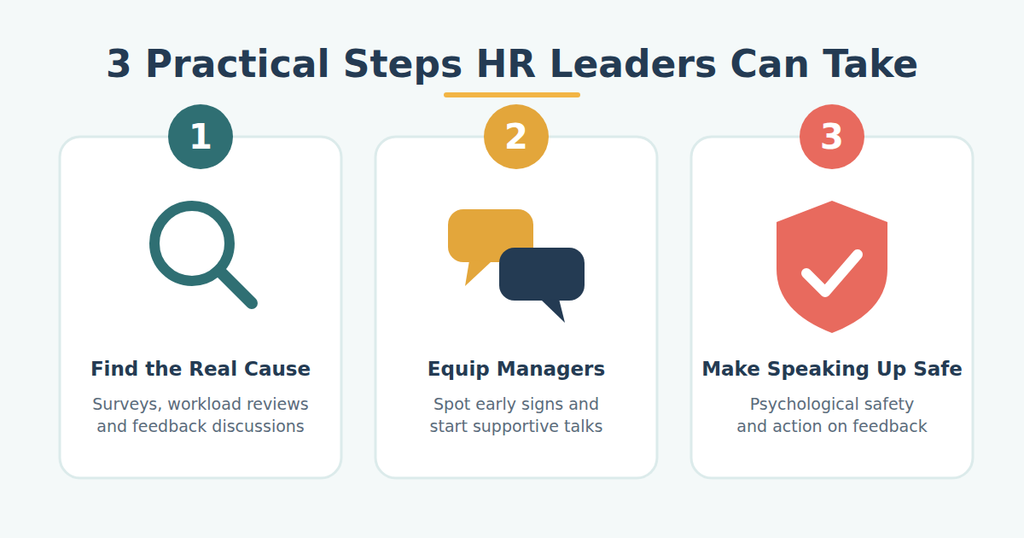
Understanding workplace stress is only the first step. Real change comes from action: identify the sources of pressure, audit workloads, clarify roles, equip managers to provide support, and act on employee feedback. Most importantly, communicate what changed so employees know their voices were heard. Here are three ways HR leaders can begin.
Step 1: Find Out What Is Actually Causing the Stress
Before introducing a wellness program, understand what employees are actually experiencing. Look for recurring patterns, such as the same teams burning out, repeated complaints, or stress linked to specific deadlines. Use Training Needs Assessments (TNAs), anonymous surveys, validated assessment tools, workload reviews, and feedback discussions to identify the source of pressure.
Pay attention to trends over time. If stress consistently spikes around reporting periods, investigate processes and expectations before assuming employees need better coping skills. Be transparent about what information is being collected, how it will be used, and how privacy will be protected. Keep surveys brief, gather only relevant insights, and ensure any clinical screening involves qualified professionals and informed consent.
Before choosing a solution, make sure you fully understand the problem. That responsibility belongs to the organization, not the employee.
Step 2: Help Managers Recognize and Respond to Stress
Managers have a significant influence on workplace stress through the way they set expectations, manage workloads, and support their teams. Yet many receive little training on how to recognize stress or respond effectively.
Training should focus on practical skills: spotting early signs of overwhelm, starting supportive conversations, discussing workload openly, making reasonable adjustments, and knowing when to involve HR or professional support. Instead of asking, “Why isn’t this done yet?”, managers can ask, “This seems to be piling up. What’s making it difficult, and how can I help?”
The goal is not for managers to diagnose mental health issues or act as therapists. Their role is to notice changes, create space for honest conversations, and work collaboratively to address barriers where possible. A simple check-in such as, “I’ve noticed you’ve been working late a lot recently. Can we look at your workload together?” can open the door to meaningful support.
When managers respond with curiosity rather than judgement, employees are more likely to speak openly about challenges without fearing negative consequences. This creates psychological safety, where seeking support is seen as a strength, not a risk.
Step 3: Make It Safer to Speak Up

Employees should never have to choose between protecting their well-being and protecting their professional reputation. Psychological safety means people can raise concerns, admit mistakes, ask for support, and speak honestly without fear of blame or career consequences.
Creating this environment requires more than policies. Organizations must examine how managers respond to mistakes, workload concerns, illness, and requests for help. Everyday behavior often shapes trust more than formal procedures.
HR should regularly review employee feedback, absenteeism, turnover, workload concerns, and engagement with support programs to identify patterns and guide improvement.
A healthy workplace is not one without stress. It is one where employees feel safe discussing pressure, receive appropriate support, and trust the organization to address workplace conditions that contribute to stress.
Bringing Clinical Psychology into the Workplace
At Pakistan Psychology Talk, I specialize in applying clinical psychology principles to workplace wellbeing, helping organizations move beyond awareness campaigns towards evidence-based, measurable interventions. My work focuses on identifying the root causes of workplace stress, strengthening psychological safety, and building mentally healthy, high-performing teams.
My services include Training Needs Assessments (TNAs), Psychological Safety Audits, Leadership Coaching, Manager Training in Mental Health Conversations, Somatic Stress-Release Workshops, Employee Assistance Program (EAP) Design, and Workplace Wellness Strategy Consulting.
I have delivered corporate mental health initiatives for organizations including NORINCO-GMG-Daewoo Orange Line Metro (OLMRTS), Folium AI, and Stylers Textile Industry, with participant feedback consistently reflecting high levels of satisfaction and perceived value.
As a Consultant Clinical Psychologist and Corporate Mental Health Specialist, I help organizations address not only how employees cope with stress, but also the workplace systems, leadership practices, and organizational pressures that create it. The goal is lasting cultural change, not just temporary stress relief.

Author
Naima Kiran is a Consultant Clinical Psychologist, Corporate Mental Health Specialist, and Founder of Pakistan Psychology Talk. She holds an MS in Clinical Psychology and an MSc in Psychology from the University of Management and Technology (UMT), Lahore, where she earned a Gold Medal in her MSc. Through clinical assessments, somatic stress-release training, and corporate well-being programs, she works with organizations to address workplace stress, support employees, and build healthier, more psychologically safe teams.
Contact Info:
Email: pakistanpsychologytalk@gmail.com
WhatsApp: +923355273273
Website: https://sites.google.com/view/pakistan-psychology-talk/home

About Muhammad Faisal
Muhammad Faisal is an HR professional with an MBA in Human Resources and six years of experience across diverse HR domains. Through HRGuide.site, he turns real-world HR knowledge into practical insights, career advice, interview tips, and valuable resources to help professionals grow and organizations thrive.