How to Deal With Job Rejection and Bounce Back
How to Deal With Job Rejection and Bounce Back
You prepared for days. You researched the company, practised your answers and arrived on time. Then the email came: “We have decided to move forward with another candidate.”
If you are wondering how to deal with job rejection, you are not alone. Almost every successful professional has been turned down at some point. What matters is how you respond. This guide explains why rejection hurts, what to do in the first 48 hours, and how to turn the experience into progress.
Why Job Rejection Hurts So Much
A job is tied to income, identity and future plans. When an application fails, it can feel like a judgment on you as a person. That is why rejection often brings disappointment, frustration or self-doubt, especially if you were close to getting the offer or have been searching for a long time.
These feelings are normal. They do not mean you are weak. They mean you cared about the opportunity. The goal is not to avoid the feeling but to avoid getting stuck in it.
Remember What Rejection Does Not Mean
- It does not mean you are unskilled. Employers often have several strong candidates and can only choose one.
- It does not mean you will never succeed. One decision from one company is a single data point, not your future.
- It is often about fit. Budget, internal candidates, team needs and timing can all affect a hiring decision, and many of these are outside your control.
7 Practical Steps to Bounce Back After a Job Rejection
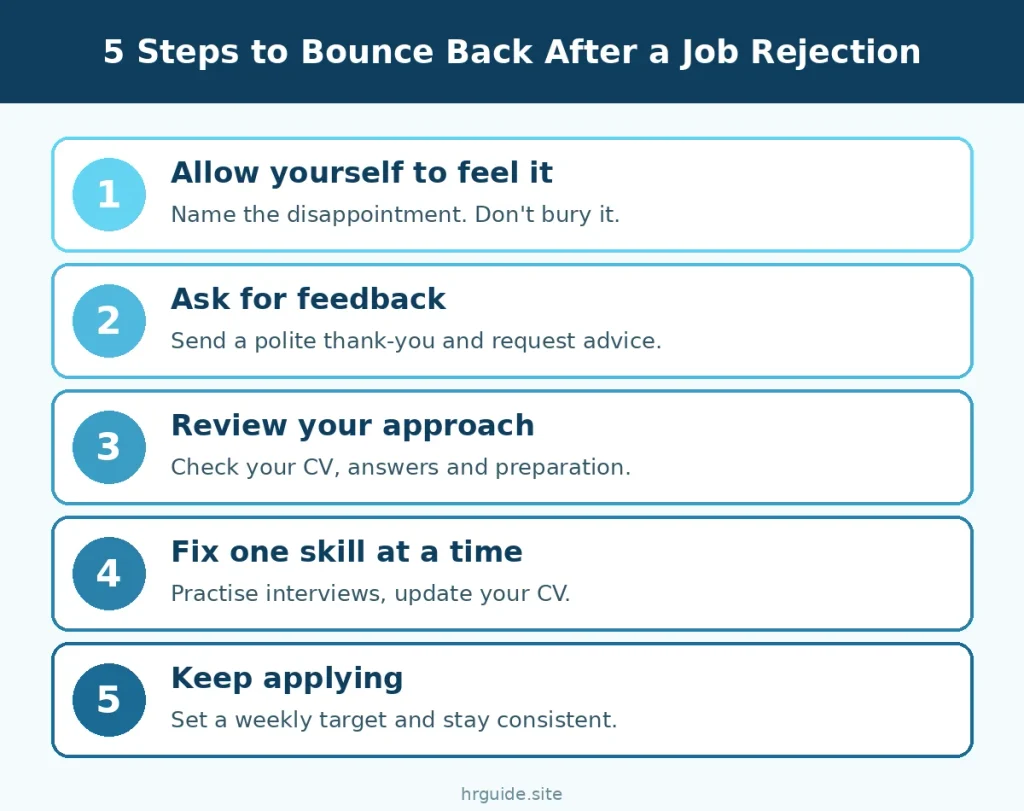
1. Give yourself time to feel it
Do not rush to “stay positive.” Take a day to feel disappointed. Talk to a friend or family member, go for a walk or write down your thoughts. Suppressed emotions tend to return later and make the next application harder.
2. Reply politely and ask for feedback
A short, professional reply can leave a good impression and sometimes opens a door for future roles. You could write:
“Thank you for the opportunity to interview for the position. I appreciate your time. If possible, I would be grateful for any feedback that could help me improve. I would also be glad to be considered for future openings.”
Not every company will respond, but when they do, the feedback can be very valuable.
3. Review your performance honestly, not harshly
Once the first sting has passed, look back calmly. Ask yourself:
- Did I research the company well enough?
- Were my answers clear, specific and backed by examples?
- Did my CV match the job requirements?
- Which question was hardest, and how could I answer it better next time?
Write down two or three things to improve. Avoid listing everything you think you did wrong. Focus on what you can change.
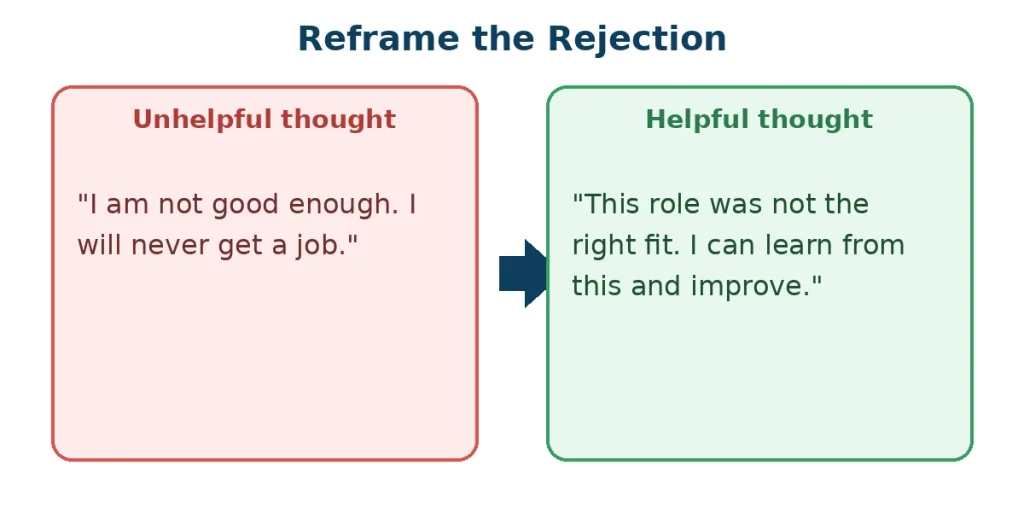
4. Reframe the story you tell yourself
The words you use inside your head shape your next move. Compare “I am not good enough” with “This role was not the right fit, and I can learn from it.” The second thought is just as honest and far more useful because it points you toward action.
5. Strengthen one skill at a time
Turn the lessons into a small plan. Practise common interview questions out loud. Ask a friend for a mock interview. Update your CV with measurable achievements. If you need help with interview nerves, read our guide on managing anxiety before a job interview and our proven tips for mastering job interviews.
(Link “managing anxiety before a job interview” to https://hrguide.site/managing-anxiety-before-a-job-interview/ and “proven tips for mastering job interviews” to https://hrguide.site/mastering-job-interviews-proven-tips-for-success/)
6. Look after your wellbeing
A long job search can wear you down. Keep a simple routine with regular sleep, meals and some physical activity. Spend time with supportive people and do things you enjoy outside the search. If sadness or stress starts to affect your daily life for a long period, consider speaking to a qualified professional.
7. Keep applying with a plan
Momentum protects your confidence. Set a realistic weekly goal, such as sending a fixed number of tailored applications and following up on earlier ones. Track each application in a simple list so you can see your progress. You can find new openings on our latest jobs page.
(Link “latest jobs page” to https://hrguide.site/latest-jobs/)
Common Mistakes to Avoid After a Rejection
- Taking it personally. The decision is about one role at one moment.
- Replying angrily. A rude message can close doors permanently.
- Applying everywhere without tailoring. Sending the same CV to every job lowers your chances.
- Comparing yourself with others. Other people’s career timelines tell you little about yours.
- Giving up too early. Many people succeed on their fifth, tenth or twentieth attempt.
A Note for HR Teams and Hiring Managers
Candidates remember how they were treated. Sending a timely, respectful rejection and offering brief feedback when possible protects your employer brand and leaves a positive impression, even for people you cannot hire right now.
Frequently Asked Questions
How long should I wait before applying again after a rejection?
There is no fixed rule. Take a short break to recover, then continue. If you were rejected by a specific company, you can usually apply for a different role there once you have improved your skills or when a better-matched position opens.
Should I ask for feedback after a rejection?
Yes, politely and briefly. Some employers cannot share details, but a few will, and their advice can help you improve.
How many rejections are normal in a job search?
It varies by field, experience level and job market. Many job seekers face multiple rejections before an offer, so it is better to focus on improving each application than on counting the no’s.
How do I stay motivated during a long job search?
Break the search into small weekly goals, celebrate small wins like getting an interview, and talk to supportive people. Keeping a routine also helps.
Final Thoughts
Job rejection is uncomfortable, but it is also part of almost every career path. Allow yourself to feel disappointed, learn from the experience, take care of your wellbeing and keep moving. Each interview teaches you something that makes the next one stronger.
Explore more interview preparation guides and CV and career development resources on HR Guide to keep building your job search skills.
(Link “interview preparation guides” to https://hrguide.site/category/interview-preparation/ and “CV and career development resources” to https://hrguide.site/category/cv-career-development/)
Disclaimer: This article is for general information only and is not professional medical or career counselling advice.

About Muhammad Faisal
Muhammad Faisal is an HR professional with an MBA in Human Resources and six years of experience across diverse HR domains. Through HRGuide.site, he turns real-world HR knowledge into practical insights, career advice, interview tips, and valuable resources to help professionals grow and organizations thrive.